
The Digital Revolution Transforming Modern Dental Care
As a dentist Pinner could tell you, the landscape of dental care has undergone a remarkable transformation in recent years, with digital innovations reshaping how practitioners approach oral health treatment. From sophisticated imaging systems to computer-aided design and manufacturing, these technological advances are revolutionising patient experiences whilst enhancing clinical outcomes. The integration of digital tools into dental practices across the UK represents a significant leap forward in precision, efficiency, and patient comfort.
Traditional dental procedures, whilst effective, often required multiple appointments, lengthy waiting periods for laboratory work, and sometimes uncomfortable impression-taking processes. Today’s digital dentistry eliminates many of these inconveniences through streamlined workflows and enhanced accuracy. Patients now benefit from same-day treatments, reduced chair time, and improved diagnostic capabilities that detect issues at their earliest stages.
Cutting-Edge Technologies Reshaping Treatment Approaches
Digital imaging technology stands at the forefront of modern dental innovation. Three-dimensional cone beam computed tomography (CBCT) scanners provide practitioners with unprecedented views of oral structures, enabling precise treatment planning for complex procedures. These detailed images allow dental professionals to identify problems that might otherwise go undetected using conventional two-dimensional radiographs.
Intraoral scanners have replaced traditional putty impressions in many practices, offering patients a more comfortable experience while providing dentists with highly accurate digital models. These devices capture thousands of images per second, creating detailed 3D representations of teeth and soft tissues. The technology proves particularly valuable for orthodontic treatment planning and prosthodontic work, where precision is paramount.
Computer-Aided Design and Manufacturing Excellence
CAD/CAM technology represents another significant advancement in digital dentistry. This sophisticated system allows practitioners to design and manufacture dental restorations chairside, often completing treatments in a single appointment. Crowns, veneers, and inlays that once required weeks to fabricate can now be created while patients wait, dramatically improving convenience and reducing the need for temporary restorations.
The precision offered by these systems surpasses traditional methods, with computer-controlled milling machines creating restorations that fit with exceptional accuracy. This enhanced fit quality contributes to improved longevity and patient satisfaction, whilst reducing the likelihood of complications or adjustments.
Artificial Intelligence and Predictive Analytics
Artificial intelligence has emerged as a powerful ally in dental diagnostics, with machine learning algorithms capable of identifying cavities, periodontal disease, and other oral health conditions with remarkable accuracy. These systems analyse radiographs and clinical photographs, often detecting abnormalities that human eyes might miss. The technology serves as an invaluable second opinion, enhancing diagnostic confidence and ensuring comprehensive patient care.
Predictive analytics further extends the capabilities of modern dental practices by identifying patients at risk for specific conditions. By analysing historical data and current oral health indicators, these systems help practitioners develop proactive treatment plans that prevent problems before they develop into more serious conditions requiring extensive intervention.
Enhanced Patient Experience Through Digital Innovation
The patient experience has been dramatically improved through digital dentistry innovations. Virtual reality systems now help anxious patients relax during procedures, whilst digital treatment planning allows practitioners to show patients exactly what their results will look like before treatment begins. This visual communication enhances understanding and builds confidence in proposed treatments.
Laser dentistry represents another significant advancement, offering minimally invasive alternatives to traditional surgical procedures. These precise instruments can treat gum disease, remove decay, and perform soft tissue procedures with reduced discomfort and faster healing times. Many patients find laser treatments more comfortable than conventional methods, often requiring less anaesthesia.
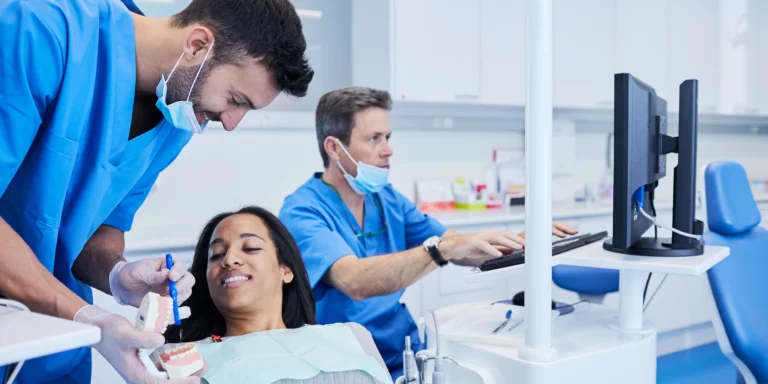
Modern practices are embracing these technologies to provide superior care experiences. The integration of digital workflows allows for more efficient appointments and better communication between patients and dental teams.
Future Prospects and Continuing Evolution
The future of digital dentistry promises even more exciting developments. Emerging technologies shaping dental practice include bioprinting, nanotechnology applications, and advanced regenerative techniques. These innovations will further expand treatment possibilities whilst continuing to improve patient comfort and outcomes.
Current innovations in digital dentistry demonstrate the profession’s commitment to continuous improvement and patient-centred care.
Embracing the Future of Oral Healthcare
Digital dentistry innovations have fundamentally transformed oral healthcare delivery, offering patients more comfortable, efficient, and precise treatments than ever before. As these technologies continue to evolve, they promise to make dental care more accessible, predictable, and effective, ultimately contributing to improved oral health outcomes across all populations.